
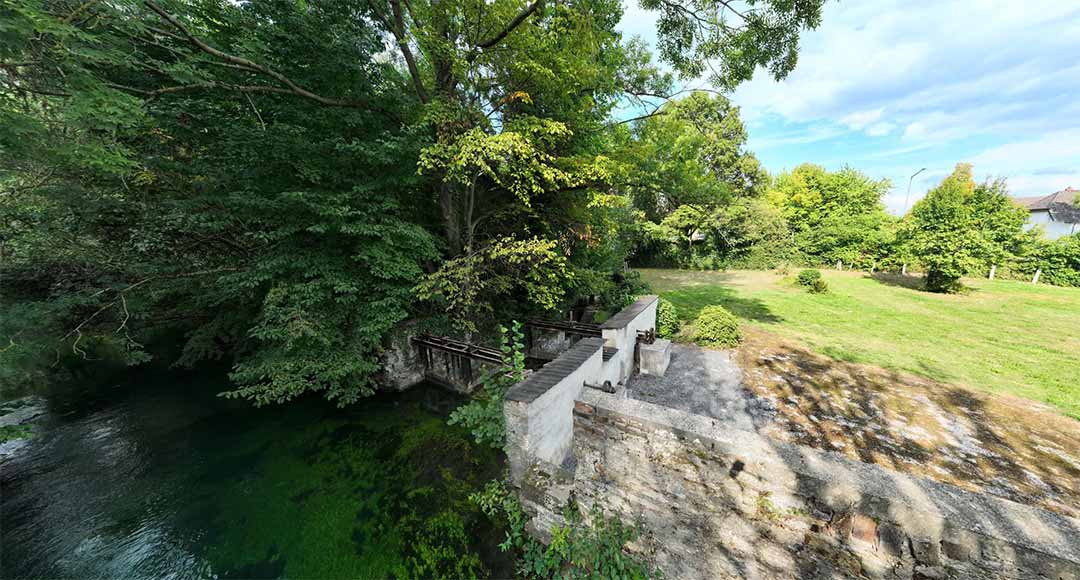
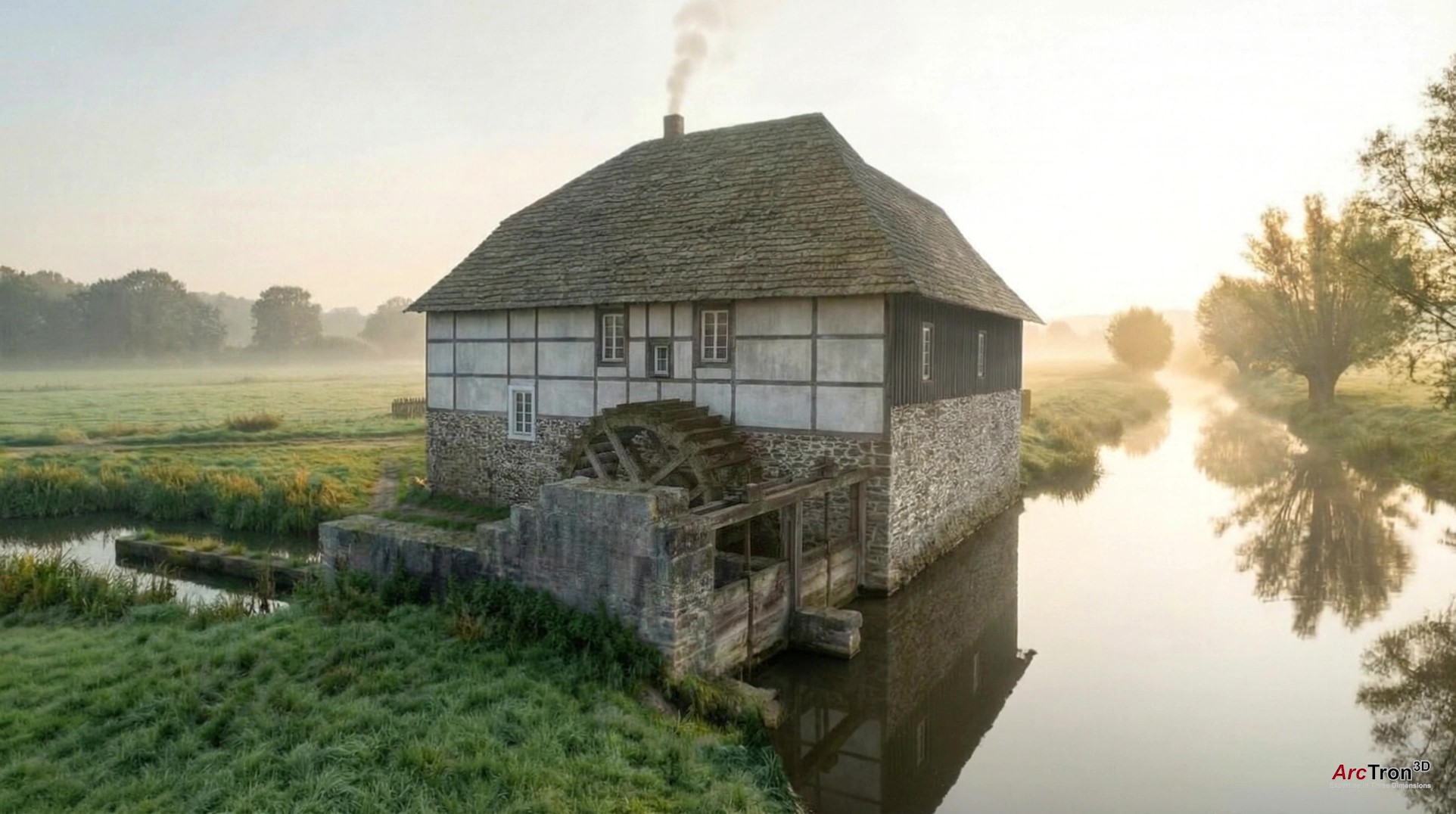
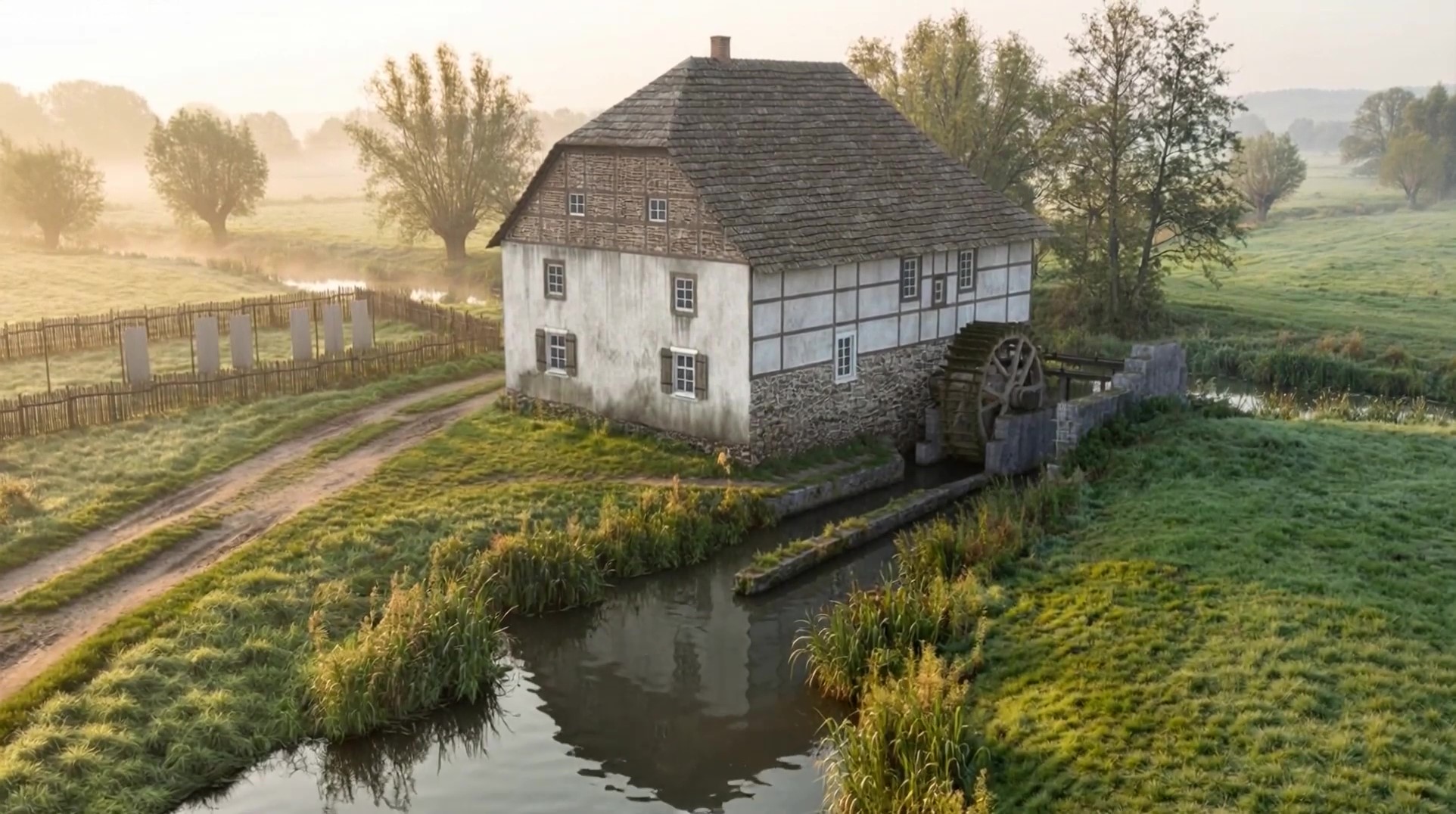
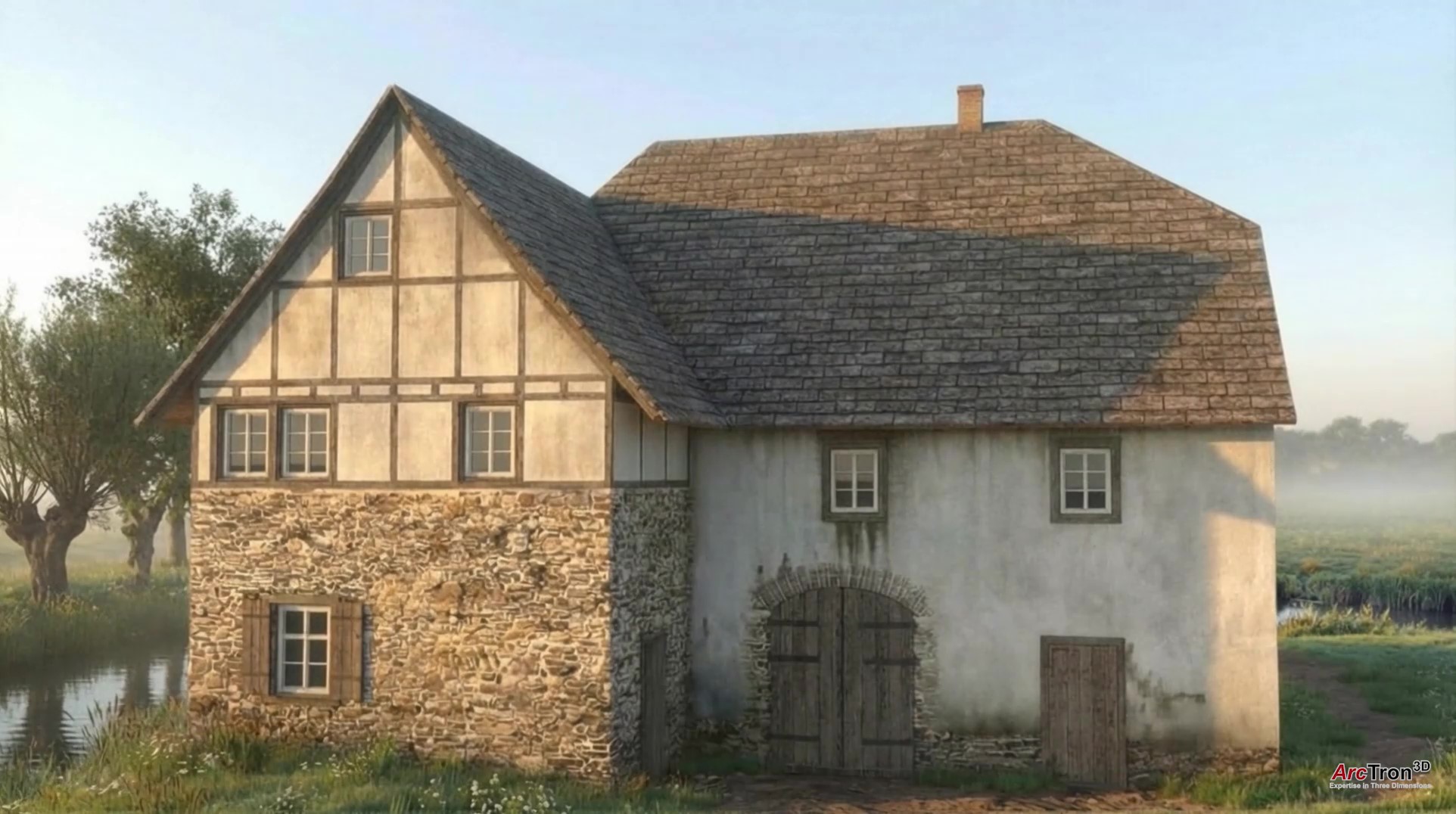
In April 2026, the urban river landscape of the Pader was awarded the 2025 European Heritage Label under the title “City. People. River. – The Pader for Europe.” Between Paderborn and Neuhaus, the Mühlenpader branches off from the Große Pader. From 1596 to 1966, the historic fulling mill stood here, first documented in records dating back to 1664. There, it harnessed the river’s water power to compact woolen fabrics and make them weather-resistant through rhythmic pounding and beating—a craft indispensable to textile production in centuries past. Today, only parts of the flood control structure and the riverbank wall remain.
Before the actual reconstruction work began, a drone survey of the site was conducted to gain a precise spatial understanding of the location. The resulting images enabled a detailed analysis of the topography and the current situation at Mühlenpader. In addition, 360° panoramas of the site were created, which not only served as a basis for planning but can also be used independently to convey digital information—for example, on websites or in interactive applications.
The actual 3D reconstruction was based primarily on historical photographs, of which only a few were available at the start of the project. The model was gradually refined through several rounds of revisions: Over the course of the process, additional sources—including documents with more precise measurements and information on the structural design of the fulling mechanism—were identified and, to the extent possible given the stage of development, incorporated into the reconstruction.
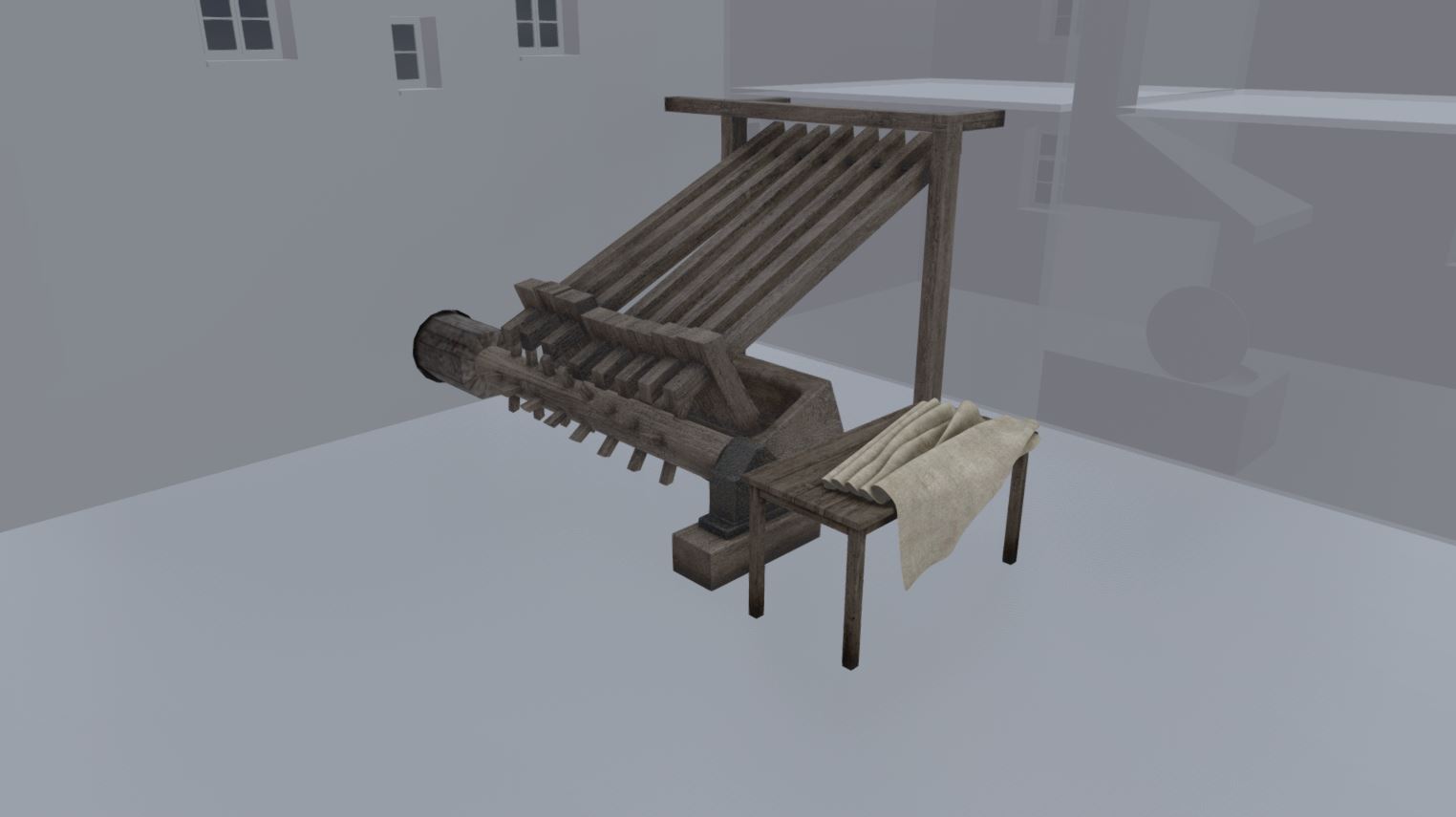
The focus of the implementation was on the detailed external representation of the building as well as on the modeling and animation of the characteristic fulling mechanism. To make the building and its function comprehensible from the inside as well, a rough interior layout was additionally developed. Supplementary objects such as a wood-burning stove, a table, and clotheslines with hanging cloths in the implied garden area lend the model a sense of liveliness and illustrate the building’s everyday use.
The result of the reconstruction is an interactive 3D model that has been published on Sketchfab, where it is freely accessible and can be explored. An engaging animated video was also created to serve as a preview of the content and provide a concise overview of the reconstructed Walkmühle mill and its operations. Both media formats are versatile and can be presented on appropriate digital channels.